
How to Prioritize Your FBA Reimbursement Audit Cases
Build an actionable FBA audit queue using verified deadlines, evidence gaps and review status, with a practical example and a clear next action for each case.
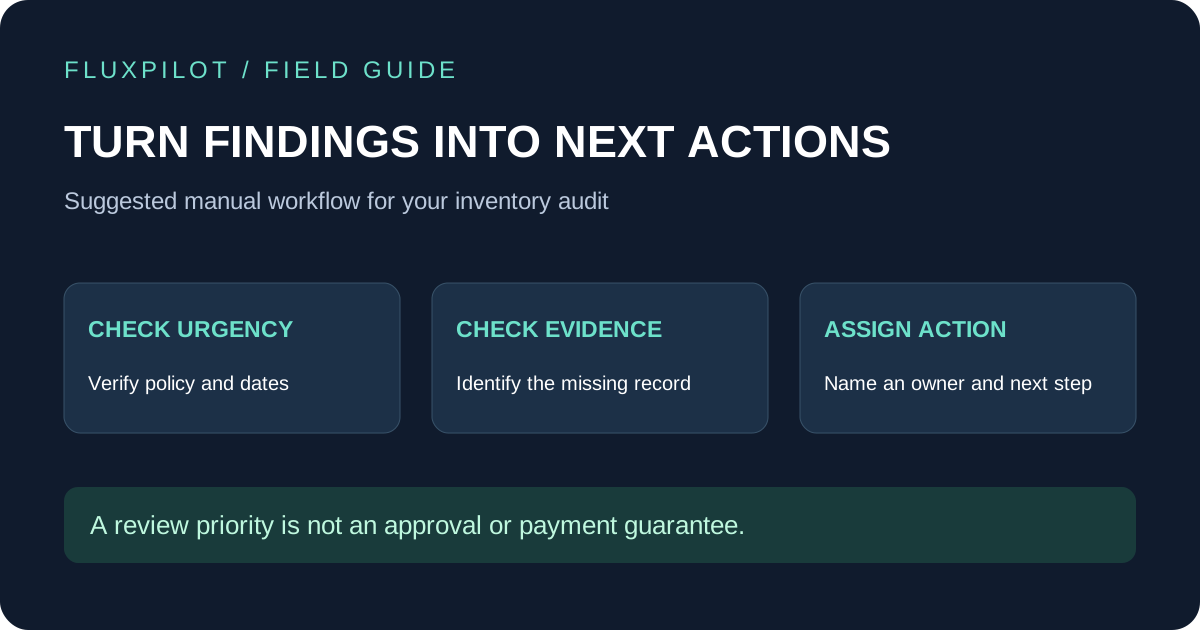
Check applicable deadlines first, then separate evidence-ready records from those needing identifiers, reports or cost data. Give every open event one owner and one next action. Use documented estimates only after the evidence is clear; a large number alone does not establish eligibility or guarantee payment.
Define a useful queue before sorting by value
An inventory audit can produce more findings than you can investigate in one sitting. Sorting solely by estimated value encourages you to spend time on large but poorly understood numbers while a smaller, better documented event waits.
Start with one review record per inventory event. Add the original reference, current evidence status, last checked date, owner and next action. Keep a separate field for an estimate and label its assumptions. An unknown cost should stay unknown; treating it as zero makes the work look less important without resolving the missing information.
The method below is a suggested organization system for your own review. It is not an Amazon processing rule, an eligibility determination or a promise that a claim will succeed.
Check urgency against the applicable policy
Before assigning priorities, verify the current policy relevant to the event and marketplace. Record the source, the triggering date and the deadline you actually established. Do not apply one deadline to every lost, damaged or returned inventory situation.
If the applicable deadline is unclear, make policy verification the next action immediately. Unknown urgency is not the same as low urgency. A recurring monthly review can help organization, but it should not replace monitoring time-sensitive requirements.
Do not delay an otherwise appropriate action simply because another case has a larger estimate. Keep deadlines visible alongside evidence readiness so the queue supports a decision rather than hiding time constraints.
Route each record to the action it needs
Use a small set of statuses that describe work, not optimism. Needs report coverage means you need the correct files. Needs matching means the records exist but the relationship is unclear. Needs cost evidence means a value estimate cannot yet be supported. Ready for policy review means the event evidence is organized, not that approval is assured.
An event may have more than one gap. Record all gaps, but choose one next action that removes the immediate blocker. That gives the person reviewing the queue a concrete task.
| Status | Next action | Completion evidence |
|---|---|---|
| Urgency unclear | Verify applicable policy and date | Recorded source and deadline assessment |
| Needs report coverage | Obtain the missing period or report | Named source file with scope |
| Needs matching | Trace event and compensation references | Documented relationship or remaining ambiguity |
| Needs cost evidence | Find relevant supporting cost record | Source-linked cost or explicit unknown |
| Ready for policy review | Check eligibility and prepare evidence | Reasoned decision and supporting records |
| Resolved | Record the verified resolution | Reference, date and reviewer |
Worked example: three findings and limited review time
Consider three fictional records. A has a large estimate but an unexplained product mismatch. B has a smaller documented estimate and a deadline verified as approaching. C has no supported estimate because its cost evidence is missing. These are examples of review states, not actual claims or policy periods.
B deserves prompt attention to its policy and submission requirements. A should receive an identifier investigation, not a larger claim based on its headline estimate. C needs cost evidence while its urgency is checked independently. The absence of an estimate does not justify forgetting it.
After each action, update the existing event record. If A becomes evidence-ready, reprioritize it. If B is already resolved by later compensation, preserve that reference and close the review rather than filing another request.
| Event | Known blocker | Immediate task |
|---|---|---|
| A | Identifier relationship unclear | Verify the product and event mapping |
| B | Approaching verified deadline | Complete the relevant policy and evidence review |
| C | Cost not documented | Find cost evidence and check urgency |
Make handoffs and follow-ups reproducible
Assign a single current owner and record the next review date. Keep the original event date separate from the follow-up date. A handoff note should state what was checked, which files were used and exactly what remains uncertain.
For a case already under review, keep its actual case reference with the event. Avoid creating parallel work merely because another team member imported a newer report. Check for existing notes and later evidence before starting a second investigation.
At each review, look first at urgent items and overdue next actions. Then process evidence-ready work and remove blockers from the remaining queue. Retain resolved items in the history so that later exports do not make them look newly discovered.
Use FluxPilot as the starting point for a documented review
FluxPilot organizes report-based inventory findings, supplied costs and reimbursement history. Use those findings to decide what needs inspection, then keep the supporting records for each conclusion. The statuses and owner fields suggested here are a manual worksheet design, not a claim that the application implements this exact queue.
A useful weekly note reports work completed: five event relationships checked, two evidence gaps resolved and one remaining policy question. An unexplained total of potential recovery says much less about progress.
Finish each session with a clear next action for every open item. Your goal is a queue another reviewer can pick up without guessing, with estimates kept separate from verified outcomes.
Frequently asked questions
Should the largest estimated case always come first?
No. Consider verified urgency and evidence readiness. A large estimate with an unresolved match needs investigation before it can support a decision.
Does an evidence-ready record guarantee reimbursement?
No. It means the supporting records are organized. Eligibility and the outcome still need to be assessed under the applicable current policy.
Sources and further reading
Workflows and examples are from FluxPilot. Amazon policies change; verify the current policy for your marketplace before filing a claim.
Amazon: source report fields for inventory and reimbursement evidence