
Amazon KDP Low-Content vs Activity Books: ISBN, Coloring Books and A+ Content
Are journals, planners, puzzle books and coloring books low-content on KDP? Compare ISBN rules, series eligibility, previews and practical book setup steps.
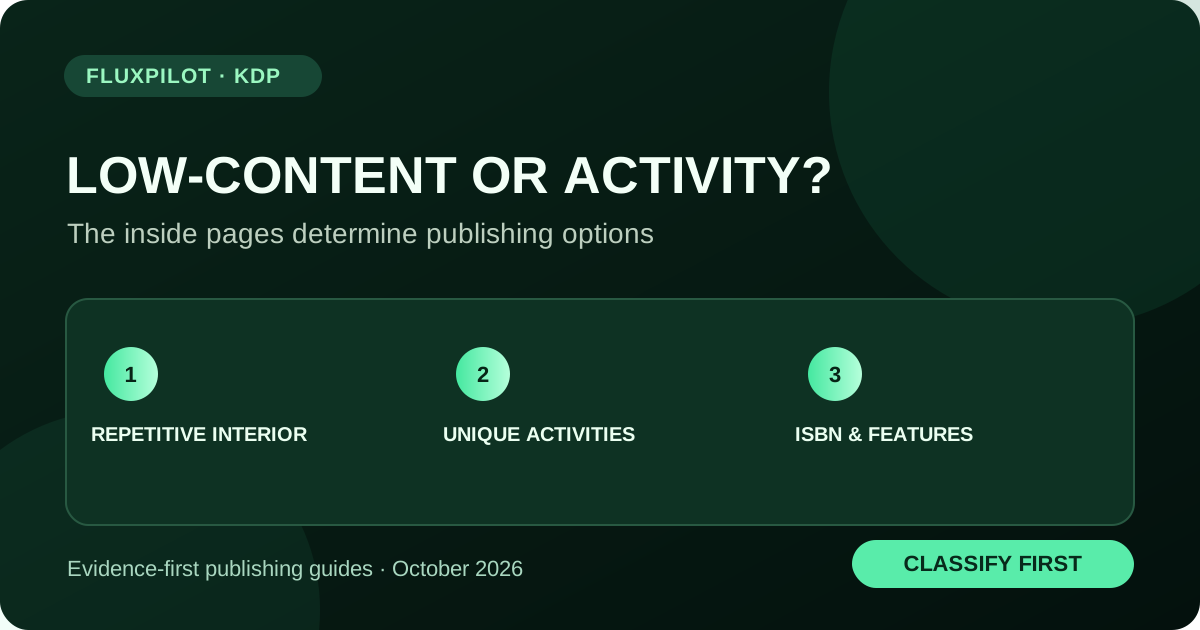
KDP generally considers repetitive-fill-in interiors such as notebooks, planners, log books and certain journals low-content. Puzzle books and coloring books are generally not low-content. Low-content books can be published without an ISBN or with your own ISBN, but do not qualify for a free KDP ISBN. Some preview, series and Expanded Distribution options differ from ordinary books.
The difference is the interior, not the cover
The term 'low-content' on Kindle Direct Publishing is a specific classification, not a synonym for a thin book, beginner project or inexpensive paperback. Amazon describes low-content interiors as minimal or repetitive content designed for the customer to fill in.
An empty lined notebook and a custom maze puzzle book may both have a similar page count, but they typically belong in different content classes. Classification should follow what the reader actually receives rather than the publisher's preferred marketing label.
Notebook, planner, coloring book or puzzle: comparison
Amazon lists notebooks, diaries, planners, log books and prompt journals among examples of low-content books. Coloring and puzzle books are in KDP's 'not generally low-content' examples. These are general categories, not a guarantee that every manuscript follows the expected pattern.
A guided journal may include repeated response fields but also meaningful instructional pages. Evaluate the overall interior and check KDP's current classification instructions. Do not try to force an activity workbook into the low-content category simply to bypass editorial work.
| Interior format | Generally low-content? | What to inspect |
|---|---|---|
| Blank lined notebook | Yes | Repeated empty pages |
| Daily habit tracker | Yes | Repeated fill-in log |
| Original maze puzzle book | Not generally | Unique puzzles and instructions |
| Original coloring book | Not generally | Unique illustration pages |
| Instructional nonfiction workbook | Not generally | Substantial instructional content |
ISBN choices are not identical for all formats
KDP low-content books do not qualify for Amazon's free KDP ISBN. A low-content publisher can use their own qualifying ISBN or choose to publish without one. KDP's guidance also notes that some features differ when a low-content title is published without ISBN.
For standard qualifying paperbacks, a free KDP ISBN may be available depending on the title and format. For both paths, check local requirements and the exact setup flow before ordering an ISBN; identifiers are not something to invent or reuse across unrelated editions.
- Low-content book: own ISBN or no ISBN; no free KDP ISBN.
- Standard qualifying print book: free KDP ISBN may be offered.
- Different print editions and formats may need separate identifiers.
- ISBN choice can affect supported preview options.
What happens to Read Sample, A+ Content and series?
For low-content titles published without an ISBN, KDP does not currently support the Read Sample feature or the back-cover thumbnail on the product detail page. KDP suggests A+ Content as an alternative way to show internal pages to buyers when appropriate.
KDP also states that low-content books are not eligible for creating a series, even with an ISBN, and are not eligible for Expanded Distribution. An author planning a notebook brand with numbered volumes should verify what storefront presentation tools are available instead of assuming standard book-series features will work.
Design the reader experience before publishing
Start by checking that each page has a clear purpose. A blank planner can be useful when its layout fits a genuinely specific job: appointment tracking for home inspectors, classroom intervention notes or medication logs (without presenting medical advice). But a planner with an attractive cover and confusing tables may earn poor reader feedback.
Activity books need more than repeated placeholders. Check puzzle accuracy, answer keys, age suitability, image rights, ink legibility, margins, and the physical usefulness of the chosen page size. A book with a dozen near-identical pages is not automatically a differentiated product.
- Review at actual print size and with realistic handwriting or coloring.
- Check all imported graphics and their commercial use rights.
- Avoid claims about learning outcomes that your content cannot support.
- Choose black or color printing based on customer utility and cost.
- Inspect interior samples or proofs where available.
A sample book setup decision tree
If your book consists mainly of repetitive spaces to be filled in, start with KDP's low-content checklist. If each page contains original puzzles, unique activities, or substantial editorial instruction, review standard paperback setup instead. Then confirm ISBN route, print settings, and available marketing features.
Do not infer Amazon's acceptance from an AI description or a third-party checker. KDP makes the final publishing determination. If the interior changes significantly before publication, revisit your classification.
Research reader needs rather than generic 'hot niches'
The productive question is not 'Which low-content niche is guaranteed to sell?' It is 'Which group needs this exact printed tool, and what are they dissatisfied with today?' Review competing formats, track repetitive complaints in reviews, and build something substantially clearer.
Using KDP Intelligence's user-provided CSV comparison can help organize your own evidence. It should not be interpreted as providing hidden Amazon conversion rates or verified niche demand.
Frequently asked questions
Is every coloring book a KDP low-content book?
No. Amazon explicitly places coloring books among types that are not generally low-content.
Can I use a free KDP ISBN for a low-content notebook?
No. KDP's low-content guidance says those titles are not eligible for the free KDP ISBN.
Can a low-content journal be in a KDP series?
KDP says low-content books are not eligible for its series-creation feature.
Sources and further reading
Original guidance by FluxPilot, cross-checked against KDP documentation. Amazon policies and marketplace rules can change; verify current requirements before publishing.
KDP: Low-Content Books KDP Metadata Guidelines KDP Tools and Resources